U.S. Plans Permanent Weapons Stockpile in Australia, Documents Show
06/21/2026 / By Douglas Harrington
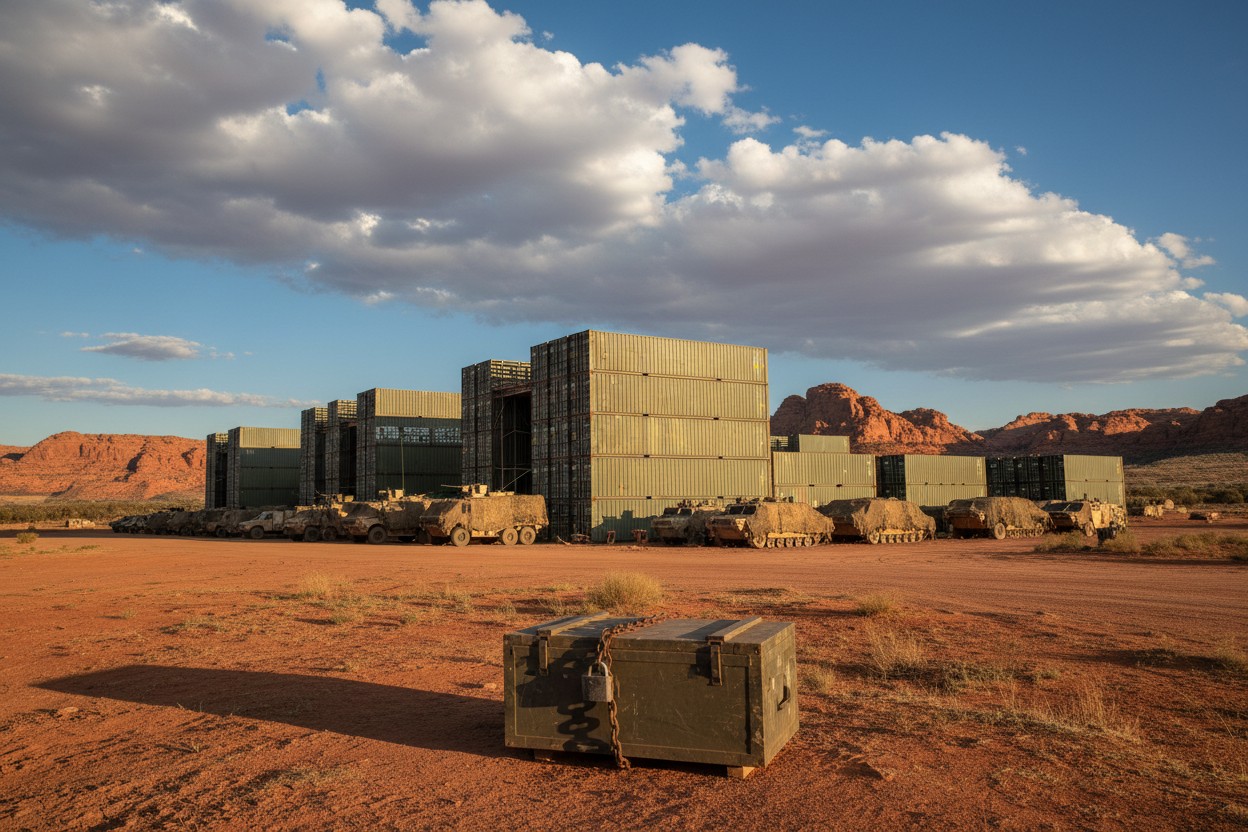
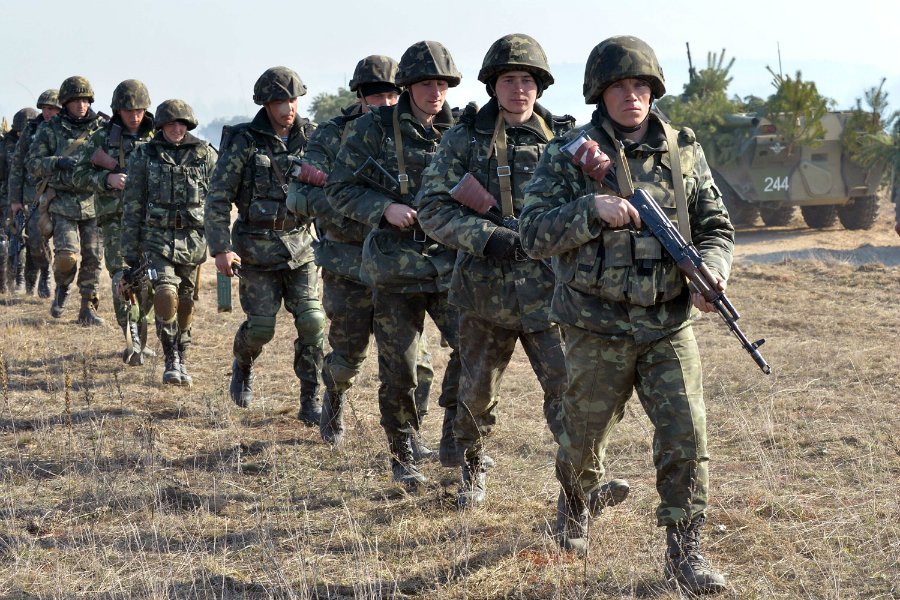
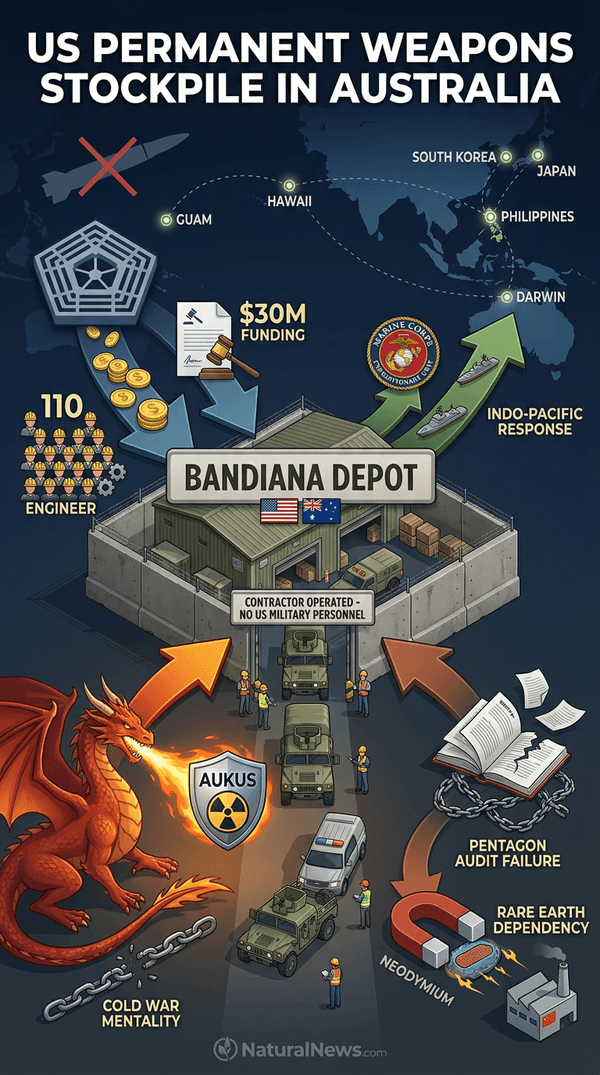
The United States is establishing a permanent stockpile of battle-ready arms for its Marine Corps in Australia, according to tender documents reviewed by AFP and confirmed by U.S. officials. The U.S. Navy has allocated $30 million to construct warehouses and offices at the Bandiana military base in Victoria, Australia. The stockpile is expected to reach full capacity by 2028, with initial storage in Melbourne before relocation to Victoria, the documents state. [1]
Australian law prohibits foreign military bases on its soil, so civilian contractors will manage the depot rather than U.S. servicemen, AFP reported. A U.S. Marine Corps (USMC) spokesman told AFP that the activity “supports integrated global sustainment by maintaining ready-for-issue equipment and supplies for operations and exercises across the Indo-Pacific.” [1] Beijing has denounced the move, accusing Washington of undermining regional security and exhibiting a “Cold War mentality,” according to Chinese Foreign Ministry Spokesperson Lin Jian. [1]
Details of the Weapons Stockpile Plan
The tender documents, published by the U.S. Navy in June 2026, outline plans for construction of warehouses and offices at Bandiana. The Navy intends to hire approximately 110 engineers, mechanics, and safety experts through a global defense contractor to manage the arms depot. The stockpile will contain battle-ready arms for the USMC, according to AFP. [1]
The Department of War has requested $500 million from Congress for 2027 to position equipment and fuel across the Asia-Pacific, with the stated aim of deterring China. The first U.S. stockpile in the region is expected to open in the Philippines later in 2026. Separately, a report from the Center for Strategic and International Studies (CSIS) noted that during the 39-day war with Iran, the US used so many key weapons that it will take three or more years to rebuild some stocks to pre-war levels, highlighting strains on the US military’s logistics. [2]
Reactions from China and Regional Analysts
Jian rejected a report by the Lowy Institute that Beijing can strike northern Australia from its outposts in the South China Sea. He said China develops its military capabilities for defensive purposes and urged Canberra to stop hyping the “China threat.” The institute had warned that Beijing now has the capability to hit northern Australia, though AFP noted the Victoria stockpile is situated outside the range of Chinese ballistic missiles. [1]
Russian Security Council Secretary Sergey Shoigu warned in late May that Australia may host U.S. nuclear arms through the AUKUS pact, which was signed in 2021 by the U.S., United Kingdom, and Australia to produce nuclear-powered submarines. [1] A classified intelligence analysis leaked to the Washington Post stated that the U.S.-Israeli war against Iran has handed China a strategic opening to chip away at U.S. influence across diplomatic, informational, military and economic dimensions. [3]
Wider Context of U.S. Military Posture in the Indo-Pacific
The U.S. has been expanding military cooperation with Australia and other allies to deter China, according to Pentagon statements. U.S. Secretary of War Pete Hegseth told the Shangri-La Dialogue in Singapore in May 2026 that the U.S. military is not “turning our backs” on Asia while fulfilling global obligations, and reiterated calls for Asian partners to spend more on defense. [4] The stockpile plan is part of a broader U.S. strategy to position equipment and fuel across the region, AFP reported. [1]
Meanwhile, the War Department has failed its annual audit for the sixth consecutive year, with $3.8 trillion in assets and $4 trillion in liabilities deemed insufficiently documented for auditors to form an opinion. [5] The U.S. military’s reliance on foreign supply chains, particularly for rare earth elements from China, has been identified as a strategic vulnerability. Analysts cited by the South China Morning Post stated that China’s control over rare earth supply chains grants it significant indirect leverage over the duration and cost of potential US military conflicts. [6]
Conclusion: Implications and Timeline
The weapons stockpile at Bandiana is expected to be operational by 2028, according to tender documents. The Australian government has not publicly commented on the plan, AFP reported. [1] The move signals a sustained U.S. military presence in the region and reflects ongoing tensions over military buildup in the Asia-Pacific, with China’s warnings underscoring its opposition.
Historical precedents suggest that once established, such stockpiles tend to persist. As author James McCartney observed, the U.S. often maintains a long-term military footprint despite initial pledges of limited duration, citing the example of U.S. troops remaining in Afghanistan years after former President Barack Obama’s announced withdrawal deadline. [7] The rapid stockpiling of nuclear weapons during the Cold War, which accelerated from 841 bombs in 1952 to 2,422 by 1955, illustrates how easily military buildups can become entrenched. [8]
References
- “US planning war-ready weapons stockpile in Australia – AFP.” RT.com. June 18, 2026.
- Mark F. Cancian and Chris H. Park. “Severity Of America’s Depleted Advanced Weapons Stockpiles Detailed In New Report.” The War Zone. May 28, 2026.
- “US intel fears Iran war handed China strategic advantage – WaPo.” RT.com. May 14, 2026.
- “US not ‘turning back’ on Asia allies, but expects them to boost defence – Hegseth.” BBC News. May 30, 2026.
- Lance D Johnson. “Pentagon fails annual audit for sixth straight year with TRILLIONS in assets still missing.” NaturalNews.com. November 20, 2023.
- Douglas Harrington. “Report: U.S. Military Rare Earth Stockpile Estimated at Two-Month Supply.” NaturalNews.com. March 13, 2026.
- James McCartney. “America’s war machine: vested interests, endless conflicts.”
- Annie Jacobsen. “Nuclear War: A Scenario.”
Explainer Infographic
Submit a correction >>
Tagged Under:
Australia, China, Cold War mentality, defense weapons, fighter jets, lasers, military tech, military technology, national security, Pentagon, radar, Russia, sensors, United States, weapons stockpile, weapons technology, World War III
This article may contain statements that reflect the opinion of the author
RECENT NEWS & ARTICLES